October 18, 2026
Do You Really Need GLP-1 Supplements? Here's the Truth
Do You Really Need GLP-1 Supplements? Here's the Truth
If you take a GLP-1 medication, you may have seen claims that you need a special supplement to protect your health. The honest answer is less dramatic: not everyone taking a GLP-1 needs supplements. But when your appetite drops and you eat much less, it can become harder to get enough protein and a range of nutrients from food.
The right approach depends on what you eat, how you feel, your health history, and, when appropriate, your clinician’s assessment. A supplement may help fill a specific gap. It cannot replace a balanced eating plan, resistance exercise, or medical advice.
Why nutrition deserves attention on a GLP-1
Medications such as semaglutide and tirzepatide can reduce appetite and food intake. A 2025 joint advisory from the American College of Lifestyle Medicine, the American Society for Nutrition, the Obesity Medicine Association, and The Obesity Society reported calorie-intake reductions of about 16%–39% in studies. Eating less does not automatically mean you have a nutrient deficiency. It can, however, make it harder to get enough from meals. Particularly when nausea, vomiting, constipation, or food aversions limit what you can tolerate.
That same advisory notes that rapid weight loss can include losses in lean body mass. In the STEP 1 semaglutide trial, about 38% of the weight lost was lean body mass. That measure includes more than muscle, so it should not be read as “38% muscle loss.” It does underline why nutrition and strength training matter during weight loss.

Start with food, protein, and strength training
A supplement is not the first step for everyone. Start by looking at the basics:
- Include a protein source when you eat. Options include eggs, fish, poultry, yogurt, tofu, beans, and lentils. If you get full quickly, eating the protein portion first may help.
- Choose nutrient-dense foods. Fruit, vegetables, whole grains, legumes, nuts, and seeds bring more than calories to a smaller meal.
- Drink enough fluids. This matters especially if you have vomiting or diarrhea. Ask your care team what fluid target is right for you.
- Do resistance exercise if it is safe for you. The 2025 joint advisory recommends strength training at least three times a week, alongside aerobic activity. Start at a level that fits your health and ability; a clinician or qualified trainer can help you adapt it.
Protein needs are individual. The joint advisory discusses higher protein targets sometimes used during weight loss, but it also notes that there is no settled, GLP-1-specific target for everyone. Your target may depend on factors such as body composition, age, kidney function, and medical history. Protein supplements can be convenient when food alone is not working for you, but more protein is not automatically better, and protein by itself does not replace resistance training.
When a supplement may make sense
A clinician or registered dietitian may consider supplements if your food intake is consistently limited, your diet has little variety, you have a known deficiency, or your health history raises your risk. A standard multivitamin may be one option for some people with a restricted diet. Other nutrients, such as vitamin D, calcium, B12, or iron, may be considered based on your diet, history, or test results.
There is no single supplement plan that fits everyone on a GLP-1. Avoid taking high doses of individual vitamins or minerals “just in case.” Some can be harmful in excess, and ingredients may duplicate what is already in a multivitamin or other product. Iron, in particular, is not something to add without a reason.
Fatigue, weakness, hair changes, or muscle cramps can have many causes. They do not confirm a nutrient deficiency. If you have persistent symptoms, very low food intake, ongoing vomiting or diarrhea, or trouble keeping fluids down, contact your prescriber. They can decide whether you need a nutrition review, testing, or treatment for side effects.
For more practical guidance, see the 2025 joint advisory on nutrition during GLP-1 therapy and the Guy’s and St Thomas’ NHS guidance on food and nutrition while taking weight-loss medicines.

How to judge a GLP-1 supplement
If you decide a supplement would be useful, look past phrases like “GLP-1 support” and read the label. Check:
- The amount of each ingredient. A list of ingredients without their doses does not tell you how much is in a serving.
- Whether the product fits your needs. A broad formula may contain nutrients you already get elsewhere, or ingredients you do not need.
- Allergens and other ingredients. Check for things like milk, sweeteners, and ingredients that may not suit your diet.
- Quality information. Look for clear manufacturing and testing details, and ask your clinician or pharmacist about potential interactions with medications.
A supplement can support your routine. It cannot guarantee that you will preserve muscle, correct a deficiency, or avoid side effects. Those outcomes depend on more than what is in a scoop.
Where Daily Foundation fits
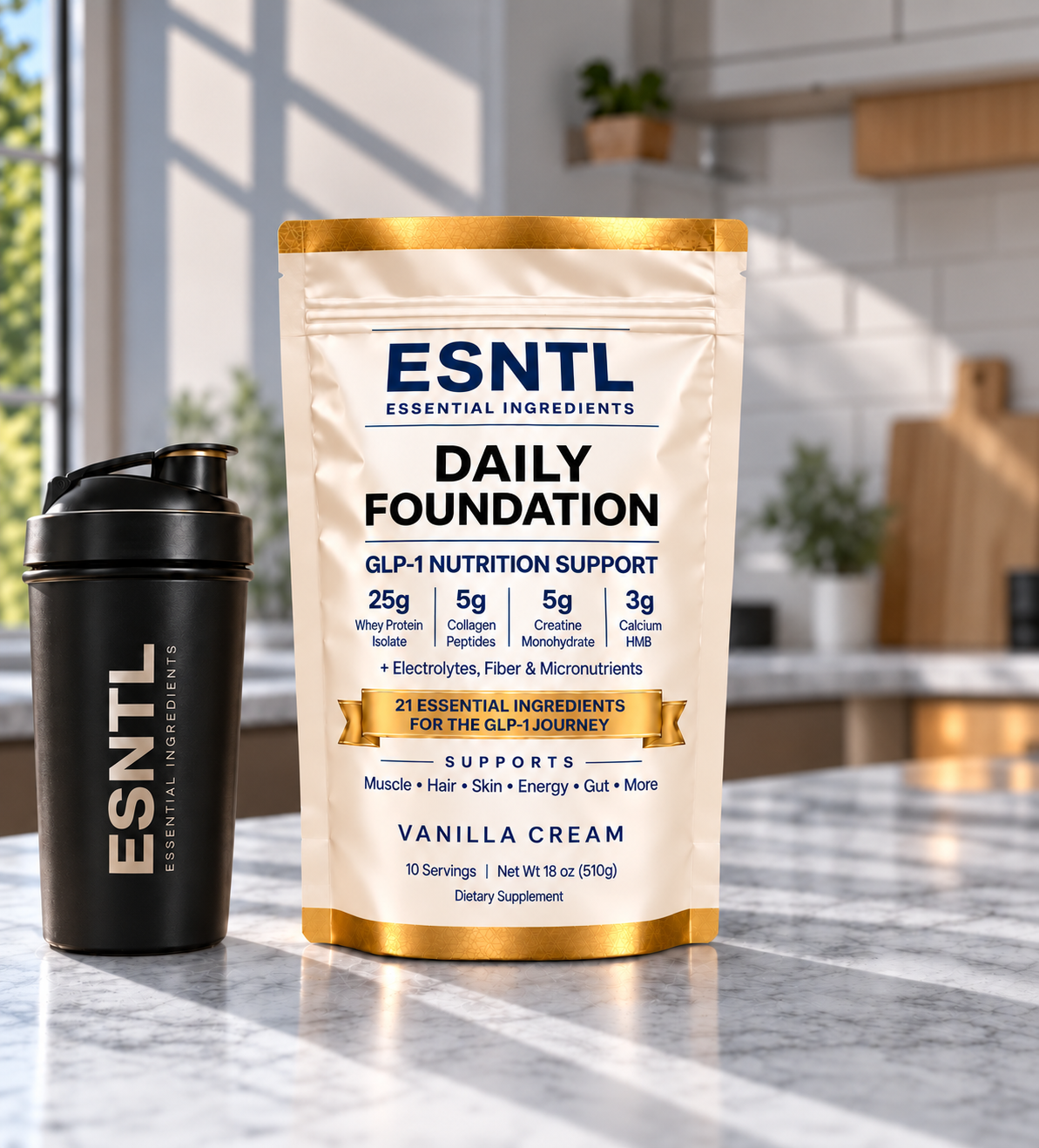
ESNTL’s Daily Foundation is one option for people who want multiple ingredients in a single serving. Its label lists 21 ingredients with their amounts, including 25 g whey protein isolate, 5 g creatine monohydrate, 3 g calcium-HMB, vitamins, minerals, and acacia fiber. It also contains milk-derived whey; check the full label if you have allergies or sensitivities.
The point is convenience and ingredient disclosure, not a claim that every GLP-1 user needs this formula. Daily Foundation is a dietary supplement, not a substitute for meals, individualized medical care, or an exercise plan. Before adding it, or any supplement, check with your clinician or pharmacist, especially if you take prescription medication or have a health condition.

The bottom line
You do not automatically need GLP-1 supplements. You do need a plan for eating well when your appetite is lower. Focus first on protein-rich, nutrient-dense foods, fluids, and strength training that suits your ability. If you are struggling to meet your needs, ask your healthcare team whether a supplement or nutrition assessment makes sense for you.
Read the label. Identify the gap. Supplement only when it helps address one.
This article is for general education and is not medical advice. Dietary supplements are not intended to diagnose, treat, cure, or prevent disease.